
Did you know that sim racing, a virtual counterpart of real-world motorsport, has surged in popularity, attracting not just avid gamers but also professional racers? This immersive and thrilling form of racing simulation offers an unparalleled experience, bringing the high-speed, adrenaline-pumping world of racing right into your living room. Sim racing’s allure lies in its ability to replicate the intricate details of real-life racing, from the feel of the steering wheel to the sound of the engine, offering an authentic experience that’s hard to differentiate from actual racing.
The concept of sim racing goes beyond traditional video gaming. It’s a blend of high-tech simulation, where precision and skill meet the excitement of racing. With advancements in technology, sim racing has evolved into a sophisticated hobby and a competitive e-sport, gaining momentum across the globe. This growing trend is not just about entertainment; it’s about skill, strategy, and the thrill of competition.
Recognizing the escalating interest in this virtual racing world, our aim with this article is to introduce beginners to the exhilarating realm of sim racing. We will guide you through selecting the perfect equipment and setting up your very own sim racing rig. Whether you’re a gaming enthusiast, a motorsport fan, or someone curious about this burgeoning sport, this beginner’s guide is your first step into the vibrant world of sim racing. Let’s buckle up and start your engines on this exciting journey!
Understanding Sim Racing
Sim racing, short for simulator racing, stands apart from traditional gaming by offering a highly realistic racing experience. It’s not just a game; it’s a simulation that closely mimics the real-world aspects of motorsport racing. This includes accurately replicated car physics, tire wear, fuel usage, and even the impact of weather conditions on the track. While traditional video games might prioritize entertainment and ease of play, sim racing emphasizes realism and precision, requiring skills similar to actual racing.

The benefits of sim racing extend far beyond mere entertainment. It’s a form of digital motorsport that allows individuals to develop and hone their racing skills without the high costs and risks associated with real-world racing. Many professional racers use sim racing as a training tool to improve their techniques, learn new tracks, and refine their strategies. Moreover, it’s a platform for enthusiasts to engage in a community that shares a passion for motorsports. The sim racing community is a vibrant and welcoming space, where beginners can learn from experienced racers, share experiences, and even participate in online competitions and leagues.
The realism factor is a significant appeal of sim racing. Advanced software and hardware work in unison to create an environment that feels incredibly real. Force feedback steering wheels and pedals allow racers to feel every bump and turn, while high-fidelity graphics and sound systems emulate the visual and auditory sensations of being on a racetrack. This level of realism not only enhances the thrill and challenge of racing but also provides valuable insights and experience that can be applicable to real-world driving and racing scenarios. For many, sim racing is the closest they can get to actual racing, offering an accessible and safe way to experience the high-octane world of motorsports.
Essential Equipment for Sim Racing
The heart of any sim racing setup is the racing wheel and pedals. These are not just controllers; they are your direct connection to the car and the track. A good quality racing wheel provides force feedback, which mimics the resistance and vibrations you would feel in a real car. Pedals should offer a realistic resistance, especially for the brake pedal, to simulate actual driving conditions. For beginners, budget options like the Logitech G29 or Thrustmaster T150 provide a great starting point without breaking the bank. Mid-range enthusiasts might consider the Thrustmaster T300RS or Fanatec CSL Elite, which offer enhanced force feedback and build quality. At the high end, products like the Fanatec Podium Series or Direct Drive wheels cater to those seeking the ultimate sim racing experience, with unparalleled realism and precision.

The racing seat or rig is another crucial element. A proper sim racing seat not only enhances comfort during long sessions but also provides the stability needed for precise movements. Basic setups can start with a simple wheel stand, which is a good space-saving solution. For those with more space and budget, a dedicated sim racing cockpit provides an immersive experience. Companies like Playseat and Sim-Lab offer a range of options, from foldable seats for small spaces to full rigs that can accommodate multiple monitors and direct drive wheels.
When it comes to visual immersion, the choice is typically between traditional monitors and VR headsets. Monitors, ranging from a single screen to a triple monitor setup, offer a reliable and customizable display option with minimal setup hassle. They are generally more affordable and less demanding on your system. VR headsets, like the Oculus Rift or HTC Vive, provide an unmatched level of immersion, giving the sensation of being inside the car. However, they can be more expensive, require a powerful computer, and some users might experience motion sickness.
Additional accessories can further enhance the sim racing experience. Gear shifters and handbrakes add realism, especially for rally or drifting simulations. High-quality headphones or a surround sound system can significantly improve audio immersion, making engine sounds and environmental effects more realistic. These accessories, while not essential, can greatly enhance the overall experience of sim racing.
Setting Up Your Sim Racing Environment
When venturing into the world of sim racing, one of the first considerations is the space required for your setup. Ideally, you need a dedicated area where your equipment can be permanently set up, ensuring stability and ease of use. For a basic setup with a racing wheel and pedals, a space of about 4×3 feet is sufficient. However, if you’re opting for a full rig with a racing seat and multiple monitors or a VR setup, you’ll need a larger area, around 6×5 feet or more. Keep in mind the need for additional space for comfortable entry and exit from your rig.
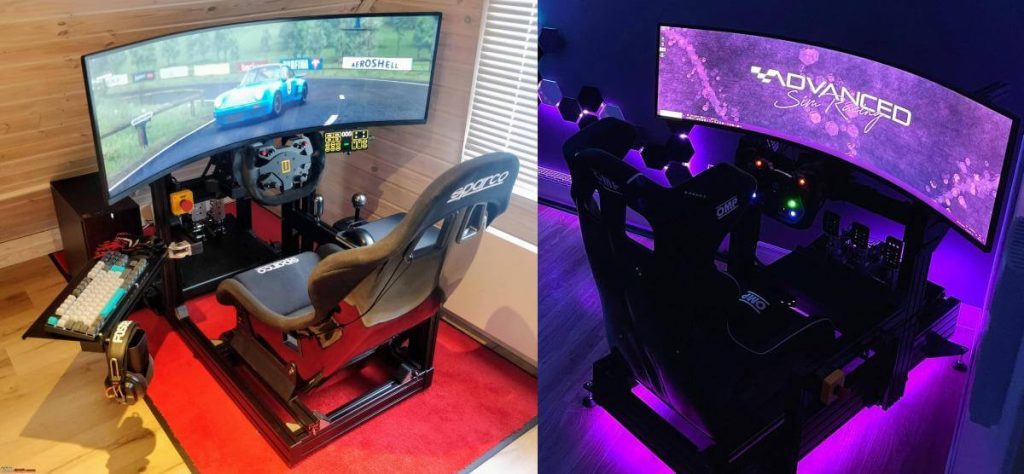
Ergonomics plays a pivotal role in your sim racing setup. Proper positioning of your wheel, pedals, and seat is crucial not only for comfort during long racing sessions but also for optimal performance. The height of your seat should allow your feet to reach the pedals comfortably, while your arms should be at a relaxed angle to the steering wheel. Monitor or VR headset placement is also key; ensure the screen is at eye level and at a distance that prevents eye strain while providing a wide field of view. Investing time in getting these ergonomics right can significantly enhance your racing experience and prevent fatigue.
Setting up the technical aspects of your equipment is the next step. This includes securely mounting your wheel and pedals to your desk or stand. Connect them to your PC or console, ensuring that all wires are neatly managed and don’t obstruct your movement. Software installation is usually straightforward; most racing wheels are plug-and-play with drivers automatically installing once connected. Calibration of your equipment is crucial – most games and simulation software have settings that allow you to adjust wheel rotation, pedal sensitivity, and force feedback to suit your preferences.
Finally, the ambiance of your sim racing space can greatly impact your experience. Proper lighting is important; avoid glare on screens but ensure enough light to prevent eye strain. Soundproofing or using a headset can immerse you in the game without external distractions. Some racers even add ambient LED lighting or posters of racetracks to enhance the mood and make their space more personal and inviting. Creating the right ambiance can make your sim racing environment not just a gaming setup but a personal haven for your racing passion.
Software and Simulation Games
Choosing the right software is a crucial step in the sim racing journey. For beginners, it’s important to select games that are not only engaging but also offer a good balance between realism and accessibility. Popular titles like “Assetto Corsa” and “Project CARS 2” are highly recommended for starters. These games offer a wide range of vehicles and tracks, realistic physics, and are friendly to newcomers. “Assetto Corsa” is particularly renowned for its accurate handling model and modding capabilities, allowing players to add custom content. “Project CARS 2“, on the other hand, offers a diverse range of racing disciplines from GT to rallycross, catering to various racing preferences.

Customization of game settings is a significant aspect of sim racing. Most sim racing games allow you to adjust numerous settings such as force feedback strength, tire wear, fuel consumption, and AI difficulty. These settings can be fine-tuned to match your skill level and preference, making the experience more enjoyable and less intimidating for beginners. Additionally, tweaking graphical settings to ensure smooth performance is key, especially when using VR or triple monitors.
Sim racing is also about community and online racing. For beginners, engaging in online communities and racing leagues can be a fantastic way to learn and improve. Platforms like “iRacing“, which is more structured and competitive, offer a great environment for serious racing and skill improvement. Communities in sim racing forums, Discord servers, or social media groups provide valuable resources, tips, and camaraderie. Participating in these communities can offer beginners insights into racing strategies, setup advice, and the opportunity to participate in beginner-friendly races and leagues. This social aspect not only enhances the fun and excitement of sim racing but also accelerates the learning curve by connecting you with fellow enthusiasts and experts.
Tips for Beginners
Embarking on your sim racing journey can be both exciting and daunting due to the steep learning curve. It’s essential to approach it with patience and a willingness to practice consistently. Remember, even the most skilled sim racers started as beginners. Don’t be discouraged by early challenges; instead, view them as opportunities to learn and improve. Start with simpler tracks and cars to get a feel for the game mechanics, and gradually progress to more complex setups. Regular practice is key to mastering the intricacies of car handling and track navigation.
Joining communities is invaluable for a beginner in sim racing. Online forums, social media groups, and local sim racing clubs can be rich sources of information and support. Platforms like Reddit, Discord, and dedicated sim racing forums are filled with enthusiasts and experts who are usually eager to help newcomers. These communities can offer advice on everything from hardware setups to driving techniques. Additionally, they provide a sense of camaraderie and belonging, making your sim racing experience more enjoyable and less isolated.
For skill development, focus on mastering the basics first. Learn about racing lines, braking points, and car control. Sim racing games often include driving aids like traction control and anti-lock brakes, which can be helpful at the beginning. Gradually reduce your reliance on these aids as you become more comfortable. Experimenting with different cars and tracks is also beneficial, as it enhances your adaptability and understanding of various racing conditions. Time trials and ghost racing against your previous laps can be great tools for measuring progress and improvement. Remember, consistent and mindful practice is more effective than simply clocking in hours. With time and dedication, your racing skills will inevitably improve, paving the way for a rewarding sim racing experience.
Final Thoughts
In summary, diving into the world of sim racing is an exhilarating experience that combines the thrill of motorsport with the accessibility of virtual gaming. We’ve covered the essentials of getting started, including the importance of choosing the right equipment – from racing wheels and pedals to seats and rigs, and the significance of monitors or VR for immersive visuals. Understanding the space and ergonomic requirements for your setup ensures comfort and effectiveness, while the technical setup enhances the overall experience. We also delved into the exciting realm of sim racing software, highlighting popular games ideal for beginners and the benefits of customization and community involvement for an enriched experience.
As a beginner in sim racing, remember that patience and practice are your best allies. Joining communities not only offers support and advice but also opens up opportunities for skill development and enjoyment. Sim racing is not just about competing; it’s about being part of a passionate community.
We invite you to start your sim racing journey with enthusiasm and explore SimRacingPedia for more resources, guides, and community connections. Whether you’re in it for fun, skill improvement, or the competitive thrill, the world of sim racing welcomes you with open arms. Rev up your engines and get ready for an adventure that brings the exhilarating world of racing to your fingertips!


